
October 9, 2026
To stay ahead in the tissue industry, German company Petrofer is actively investing in three key technologies: bio-based chemistries, advanced enzyme technology, and digital process optimization. Tissue360° talks to Gesa-Marie Fischer, managing director, about innovations in the tissue industry and the company’s expansion into the US.
A true family business, Petrofer was founded in Germany in 1948 by Heinz-Rudolf Fischer, Gesa-Marie’s grandfather. The company started as a regional supplier of lubricants and industrial chemicals. Now in its second and third generation of ownership, the company has grown into a global leader with more than 10 manufacturing facilities, and representation in more than 70 countries.
Petrofer’s involvement in the tissue industry spans more than four decades, most notably through its Yankee coating chemistry, where it has built a worldwide base of loyal customers and established itself as the technical leader in coating applications. The product portfolio covers the full tissue production chain: pulp preparation, wet-end chemistry, and converting.
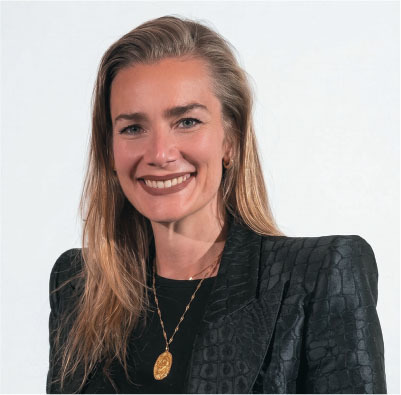
Petrofer Managing Director Gesa-Marie Fischer.
TISSUE360°: Can you touch on how your German and European background has shaped the company’s approach to tissue chemistry? And how has its expertise in lubricants and industrial chemicals helped position Petrofer as a leader in this highly specialized market?
Fischer: Germany’s engineering culture and Europe’s regulatory rigor (e.g., BfR compliance standards) have always influenced Petrofer’s development. Through continuous investment in R&D, we create solutions that are high-performing, safe, and sustainable. We develop our technologies entirely in-house and test them with customers under real mill conditions before commercializing them globally. This ensures that our solutions are practical, robust, and proven in production.
Petrofer’s roots in industrial chemistry like lubrication, process fluids, and surface chemistry gave us a natural foundation for the precision-chemistry demands of tissue production. The Yankee dryer, for instance, requires exact control of adhesion, coating film properties, and release dynamics—all areas where Petrofer’s formulation expertise translated directly.
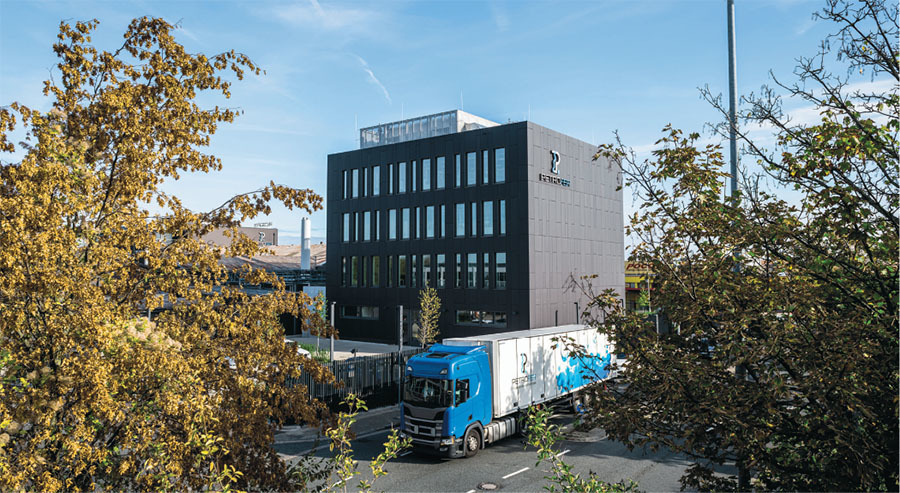
Petrofer is now expanding its business in the US. Can you tell us more about this?
Our expansion into the US market is a major strategic milestone for Petrofer. The North American tissue market is growing rapidly, with significant investments in new capacity and high-speed production lines. These developments create higher demands for reliable chemistry. This is exactly where Petrofer steps in. With Petrofer USA LLC, we are building a local platform for technical service, supply, and customer collaboration. The aim is not simply to sell into the market from a distance. We want to support mills locally.
As managing director, what is your long-term vision for Petrofer’s role in the global tissue industry over the next 5–10 years?
My long-term vision is for Petrofer to become the most trusted process technology partner for the global tissue industry. The market is shifting rapidly toward higher speed machines and premium product qualities. To master these challenges, manufacturers need more than just a chemical supplier. They need a partner who combines precise chemical formulation with deep operational insight.
Can you explain in more depth in what way Petrofer is more than “just” a supplier?
We have a customer centric working model. Every project begins with field surveys conducted by Petrofer’s highly knowledgeable technicians, who assess the specific machine configuration, furnish, target quality parameters, and operational challenges before a product is ever recommended. From there, trials are designed against agreed targets, with laboratory data predictions on adhesion and coating behavior used to reduce production risk. The result is a co-developed solution, not an off-the-shelf product. The ethos is captured in Petrofer’s slogan: “We listen. We develop. We deliver.”
Can you highlight one or two breakthrough innovations Petrofer has developed recently and explain their impact on tissue producers’ efficiency, quality, or cost savings?
Two notable innovations stand out. First, the COTAC 3240 H, a new high-performance Yankee coating specifically engineered for high elongation and high machine speeds, addressing one of the most critical challenges as producers push throughput limits.
Secondly, EMBOLUBE, our water-based embossing lubricant developed for the converting stage of tissue paper production. The conventional lubricant used on embossing machinery is mineral-oil based, which poses negative health and environmental impacts. Another significant risk stems from their low flashpoint. When you combine that with tissue dust, the electrical charge on a converting machine, and the aerosol mist of the oil, the result is a serious fire risk. EMBOLUBE eliminates the flashpoint problem entirely. As a water-based product, it carries no ignition risk, directly reducing fire hazard for plant workers and cutting the costs associated with fire incidents. This product was developed in close collaboration with Sofidel and won the Best Sustainability Project award.
What emerging technologies is Petrofer investing in to stay ahead in tissue innovation?
To stay ahead in the tissue industry, Petrofer is actively investing in three key technologies: bio-based chemistries, advanced enzyme technology, and digital process optimization. Meeting the growing market demand for mineral-oil-free solutions, we are heavily investing in the next generation of water-based release agents, seamlessly building upon our existing portfolio of established water-based embossing lubricants.
In tandem, we are continuously expanding our enzyme portfolio, strongly believing in its advantages over traditional chemistry. As naturally occurring biomolecules, enzymes act as specific, non-consumed catalysts that significantly lower both product dosage requirements and the overall environmental footprint. A prime example is our PETROZYM STR enzyme range, which has already enabled leading global tissue producers to reduce refiner energy consumption by an average 30 percent while simultaneously improving stock drainage on the wire. Furthermore, we see massive potential for enzyme applications in the repulping of wet-strength broke as a powerful, safe alternative to traditional oxidative repulping agents that pose risks to human health and the environment. To drive this shift, we are currently optimizing and expanding our dedicated PETROZYM REP portfolio.
Finally, digital process monitoring and AI-assisted dosing optimization are areas where the tissue industry is heading rapidly, and Petrofer’s laboratory capability, including predictive adhesion modeling, is a foundation for translating that into real-time production support.
Finally, what differentiates Petrofer’s solutions from competitors in the tissue chemicals space?
Three things separate Petrofer: depth of application knowledge, the breadth of our formulation portfolio, and the field service model that connects the two.
Over decades, Petrofer has built a profound level of application knowledge that goes far beyond basic chemistry. Through our comprehensive, in-depth machine assessments, we thoroughly analyze machine designs, production speeds, furnish variability, and specific operator needs. This holistic understanding enables us to act as a single technical partner capable of optimizing the entire production system, rather than making isolated, short-term interventions. Backed by extensive references across diverse machine types, operating speeds, and geographies, Petrofer brings a proven knowledge base that takes decades to build.
But behind all of that, the driving force behind this success is our people. Our employees are our most valuable asset, consistently leading with accountability, dedication, and courage. Their relentless thirst for learning and their commitment to optimizing processes on behalf of our customers are truly incomparable.