
October 9, 2026
Many tissue mills in the southeastern United States, particularly in Georgia, Alabama, Mississippi, South Carolina, and North Carolina, operate in one of the most active lightning regions in the country.
Facilities operating there are exposed to elevated lightning-related risks. Even in areas with infrequent thunderstorms, severe lightning events can still occur, leading to catastrophic damage, injury, downtime, and unpermitted emissions or discharges due to process upsets.
Because of these factors, protective systems—such as lightning avoidance systems, grounding networks, and surge protection devices—are considered essential in tissue mill design. Without them, the combination of structural exposure, geographic location, electrical sensitivity, and combustible materials creates a significant vulnerability to lightning-related incidents.
When this occurs, the financial consequences can be devastating. In industrial settings, a single strike can ignite fires, destroy valuable assets, and lead to costly downtime and environmental damage.
LIGHTNING DEFENSE—OVER 200 YEARS OF EXPERIENCE AND ACCUMULATED KNOWLEDGE
These risks are leading tissue mills to adopt lightning defense strategies designed to protect structures, equipment, and personnel. However, with many technological advances since the invention of the Franklin Lightning Rod more than 250 years ago, navigating the maze of potential lightning protection solutions can be daunting.
Lightning defense is a specialized body of knowledge that has accumulated over 200 years. Broadly speaking, lightning defense encompasses two key approaches: lightning protection and lightning avoidance, such as charge transfer technologies. Proper grounding and surge protection are also critical.
Due to the wide range of available technologies, mounting an effective defense against lightning-related threats typically requires a tailored strategy that integrates multiple solutions, each having its own specific purpose for minimizing damage or avoiding it altogether. The optimal combination depends on the specific site conditions and the nature of the operation.
To navigate this complexity effectively, it is essential to engage qualified lightning protection experts who can conduct thorough site evaluations, identify and prioritize vulnerabilities, and recommend appropriate protection solutions.
“Rather than offering a one-size-fits-all solution, lightning protection and mitigation recommendations should be tailored to a facility’s unique vulnerabilities, whether that involves bonding solutions for storage tanks, direct strike avoidance, secondary damage caused by a nearby strike, or grounding improvements,” says Joe Lanzoni, vice president of sales at Lightning Eliminators & Consultants, Inc. (LEC), a pioneer in the field of lightning protection since 1971.
According to Lanzoni, LEC engineering and sales engineers combined have more than 160 years of experience in lightning protection. Today, LEC’s solutions protect critical operations and structures for some of the world’s most recognized companies, including Federal Express, UPS, Marathon Petroleum, Chevron, ExxonMobil, Telluride Ski Resort, and thousands more.
VULNERABILITIES EXPOSED
Lanzoni says that tissue mills are particularly vulnerable to lightning strikes due to several interrelated factors. Most facilities include tall stacks, chimneys, cooling towers, cranes, and other vertical structures made of steel or other conductive materials that provide an attractive strike point for lightning.
Modern operations today also rely on complex electrical and control systems, which are sensitive to voltage surges. Even indirect lightning strikes up to a mile away can result in equipment failure or operational disruption.
For these reasons, comprehensive lightning protection systems are critical in safeguarding tissue mills.
PROTECTING FACILITIES
Lanzoni says the appropriate combination of solutions can only be determined through a comprehensive evaluation of each facility’s current protection measures, grounding systems, and overall risk exposure.
“Understanding a facility’s past issues, vulnerabilities, and protection goals helps determine whether the solution should focus on grounding enhancements, surge protection, direct strike avoidance, secondary damage from a nearby strike, or a combination of all three,” says Lanzoni.
By conducting a thorough site assessment, LEC helps facilities identify vulnerabilities and implement customized mitigation strategies, whether that means improving grounding, adding targeted surge protection, or implementing direct strike mitigation solutions.
LIGHTING PROTECTION WITH “NO STRIKE” WARRANTY
According to Lanzoni, the most effective defense is to prevent a lightning strike from occurring. This is a far superior solution than a lightning rod-based system that attracts lightning to the protected site and then attempts to manage the strike.
Lightning occurs when the difference in potential between storm clouds and the earth reaches a critical level, triggering an electrical discharge. For lightning to strike, it requires a connection between a downward leader from the cloud and an upward streamer from the ground.
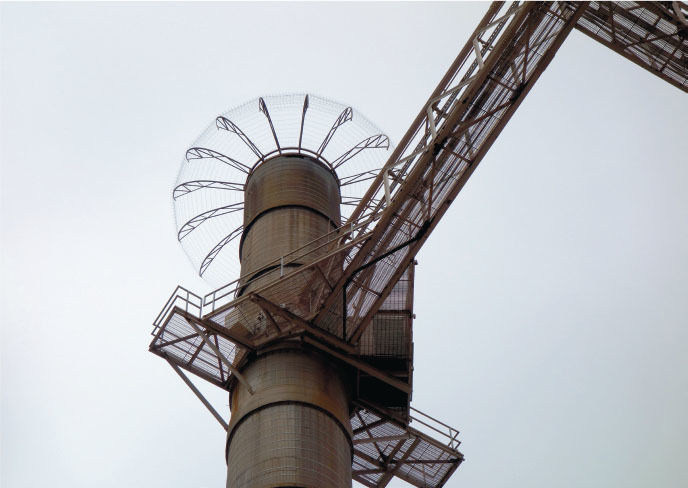
The Dissipation Array System® (DAS®) from LEC is designed to prevent direct lightning strikes within its designated protection area by lowering the electric field to levels below those required for lightning to form.
DAS prevents these connections by using point discharge technology, which neutralizes the charge differential before a strike can occur. Through a system of well-grounded points, DAS facilitates the exchange of ions between the air and the ground, disrupting the conditions necessary for a lightning strike.
DAS can be integrated with a wide range of structures, including buildings, towers, tanks, and stacks. Since its inception, more than 3,500 DAS installations have been deployed worldwide, accumulating more than 77,000 system years of effective performance. Testimonials from industry leaders confirm its effectiveness, with companies reporting significant reductions in maintenance costs and improved reliability. DAS is 99.8% effective in eliminating strikes.
LEC even offers a “No-Strike” warranty for all supervised installations, ensuring complete protection when the system is properly maintained and inspected.
The effectiveness of the DAS is enhanced when combined with grounding systems that prevent equipment damage by dispersing the current into the earth and surge protection devices installed at critical points, like base station shelters, to ensure sensitive electronics are shielded from voltage spikes.
Considering the increasing risks posed by lightning-related events, tissue mills cannot afford to rely on outdated or piecemeal lightning protection strategies. As operations become more complex and the consequences of downtime more severe, the need for a site-specific lightning protection strategy is imperative.
Technological advancements now offer a range of solutions far beyond traditional methods, but selecting the right combination requires deep expertise and an understanding of each facility’s unique vulnerabilities.
For more information, email info@lecglobal.com or visit lightningprotection.com.