
March 23, 2026
Pulp and paper mills are generally susceptible to lightning strikes and their secondary effects due to their physical structures, operational processes, and locations. Many pulp and paper mills are in regions with high thunderstorm frequency, especially in areas with humid, subtropical, or temperate climates. This is particularly true for mills situated near large bodies of water such as rivers or coastlines, which are common locations due to the need for substantial water availability.
These regions can experience a high density of lightning strikes. Even in areas with infrequent thunderstorms, severe lightning events can still occur, leading to catastrophic damage, injury, downtime, and unpermitted emissions or discharges due to process upsets.
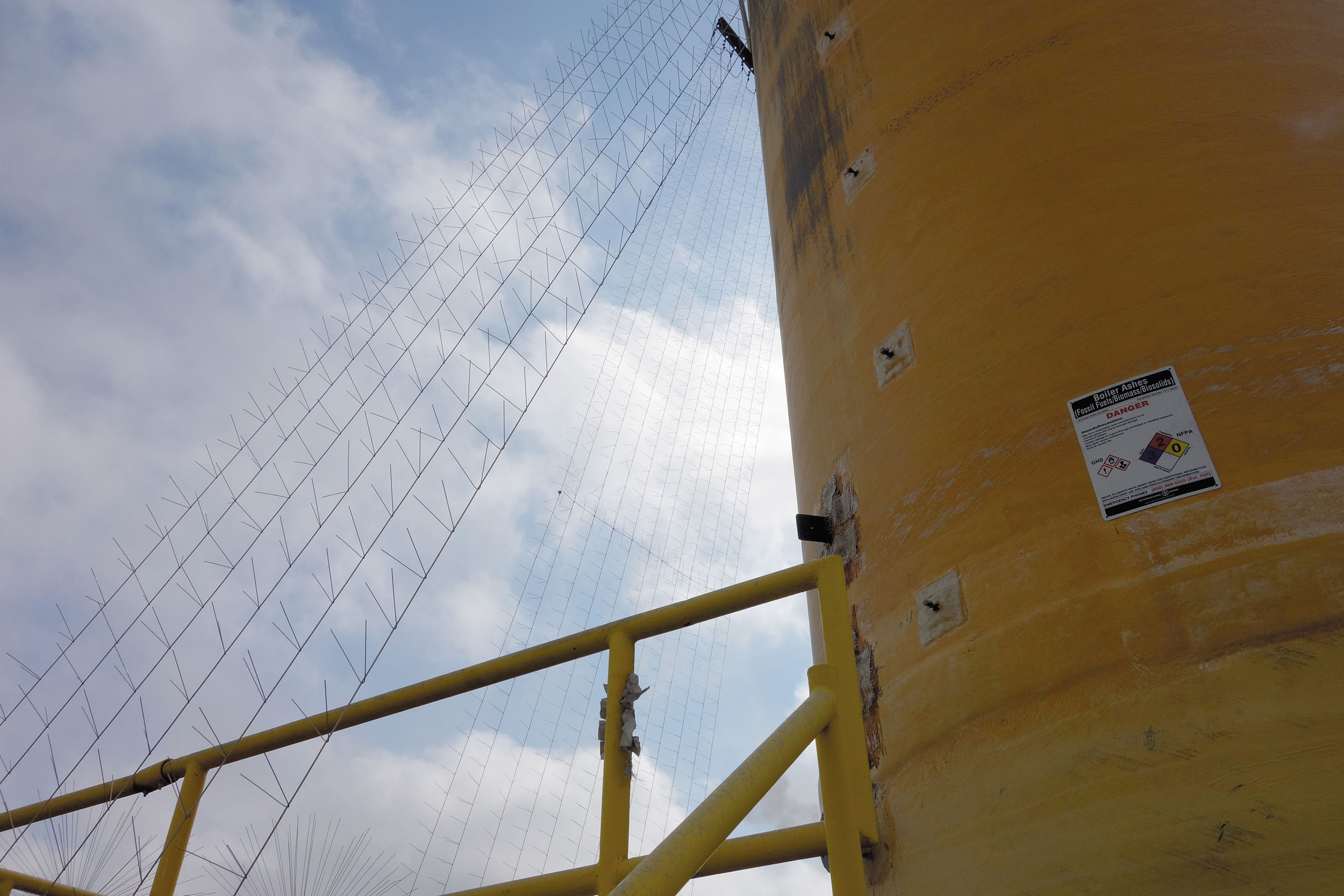
Protective systems—such as lightning avoidance, grounding networks, and surge protection devices—are considered essential in pulp and paper mill design.
Because of these factors, protective systems—such as lightning avoidance systems, grounding networks, and surge protection devices—are considered essential in pulp and paper mill design. Without such systems, the combination of structural exposure, geographic location, electrical sensitivity, and combustible materials creates a significant vulnerability to lightning-related incidents.
When incidents occur, the financial consequences can be devastating. In industrial settings, a single strike can ignite fires, destroy valuable assets, and lead to costly downtime and environmental damage.
This is leading many pulp and paper mills to adopt lightning defense strategies designed to protect structures, equipment, and personnel. However, with many technological advances since the invention of the Franklin Lightning Rod more than 250 years ago, navigating the maze of potential lightning protection solutions can be daunting.
Lightning defense is a specialized body of knowledge that has accumulated for over 200 years. Broadly speaking, lightning defense encompasses two key approaches: lightning protection and lightning avoidance, such as Charge Transfer technologies. Proper grounding and surge protection are also critical.
To navigate this complexity, it is essential to engage qualified lightning protection experts. “Rather than offering a one-size-fits-all solution, lightning protection and mitigation recommendations should be tailored to a facility’s unique vulnerabilities, whether that involves bonding solutions for storage tanks, direct strike avoidance, secondary damage caused by a nearby strike, or grounding improvements,” says Joe Lanzoni, vice president of sales at Lightning Eliminators & Consultants, Inc. (LEC), a pioneer in the field of lightning protection since 1971.
VULNERABILITIES EXPOSED
Lanzoni says that pulp and paper mills are particularly vulnerable to lightning strikes. Most facilities include tall stacks, chimneys, cooling towers, cranes, and other vertical structures made of steel or other conductive materials, which provide an attractive strike point for lightning. Compounding the hazard is the presence of flammable chemicals such as turpentine and tall oil, which make any ignition source, including a lightning strike, a serious safety hazard. Modern pulp and paper operations also rely on complex electrical and control systems, which are sensitive to voltage surges. Even indirect lightning strikes up to a mile away can result in equipment failure or operational disruption.
At pulp and paper mills, one of the most immediate consequences is operational downtime; even a momentary process upset can cause cascading issues and hours of lost production and poor quality. The interconnected nature of the electrical and control networks within these facilities means that a single surge event can cause significant financial losses, wasted products, and operational headaches. Facilities may also incur significant repair and replacement costs due to infrastructure damage. When a process upset occurs, unpermitted air or water emissions can occur, risking fines and reputational damage.
Safety is another major driver for investment in lightning protection. Lightning strikes or their secondary effects can result in serious injuries to mill personnel. Such incidents not only endanger lives, but also expose companies to legal liability and potential litigation. For these reasons, comprehensive lightning protection systems are critical for pulp and paper mills.
Lanzoni says the appropriate combination of solutions can only be determined through a comprehensive evaluation of each facility’s current protection measures, grounding systems, and overall risk exposure.
CASE STUDY: IP PENSACOLA
LEC was contacted by Kellogg, Brown and Root (KBR) to perform a site survey of a substation and switchgear building for an International Paper (IP) mill in Pensacola, FL. The mill, which manufactures linerboard, corrugating medium, and fluff pulp, had lost power from the substation during lightning storms, which caused the mill to shut down.
Pensacola’s location on the warm, moisture-rich Gulf of Mexico creates ideal conditions for frequent and intense thunderstorms, making it one of the most lightning-intensive areas in the continental US. Florida experiences more lightning strikes per square mile than any other state, with an annual average of about 1.2 million strikes statewide.
The comprehensive site survey included inspection to identify areas of vulnerability to both direct lightning strikes and the secondary effects of lightning, as well as evaluation of the existing grounding system and lightning and surge protection equipment.
The survey indicated that the grounding between the utility’s substation and switchgear building was questionable, as was the grounding between the switchgear building and the mill’s Power Complex. The substation had Early Streamer Emitters, a device designed to capture lightning strikes, and tall poles called static lightning masts that are designed to attract lightning.
Clearly, the level of protection provided by the ESE and static lightning masts was inadequate. In addition, the switchgear building had no lightning protection or surge protection equipment. A DC rectifier/charger for the switchgear battery had suffered lightning-related damage.
LEC recommended that IP install direct lightning strike protection on the utility’s substation and switchgear building. According to Lanzoni, the most effective defense is to prevent a lightning strike from occurring. This is a far superior solution than a lightning rod-based system that attracts lightning to the protected site and then attempts to manage the strike.
Lightning occurs when the difference in potential between storm clouds and the earth reaches a critical level, triggering an electrical discharge. For lightning to strike, it requires a connection between a downward leader from the cloud and an upward streamer from the ground. LEC’s Dissipation Array System® (DAS) is designed to prevent direct lightning strikes within its designated protection area by lowering the electric field to levels below those required for lightning to form.
DAS prevents these connections by using point discharge technology, which neutralizes the charge differential before a strike can occur. Through a system of well-grounded points, DAS facilitates the exchange of ions between the air and the ground, disrupting the conditions necessary for a lightning strike.
DAS can be integrated with a wide range of structures, including buildings, towers, tanks, and stacks. Since its inception, more than 3,500 DAS installations have been deployed worldwide. Companies report significant reductions in maintenance costs and improved reliability: DAS is 99.8 percent effective in eliminating strikes. LEC even offers a “No-Strike” warranty for all supervised installations, ensuring complete protection when the system is properly maintained and inspected.
Crews installed the Dissipation Array System (DAS) at IP Pensacola on the substation to prevent direct lightning strikes. Spline Ball Terminals (SBTs) were installed on the switchgear building and Spline Ball Ionizers (SBIs) were installed on the nearby poles. The SBTs and SBIs will prevent the building and poles from collecting lightning strikes.
They also installed surge protection devices on the relay control wires inside the switchgear building, and on the new rectifier/charger.
The team tested and audited the grounding system. Recommendations included improving earth grounding and bonding between the substation and switchgear building. LEC also noted that transmission towers to the substation needed to be bonded to the substation.
Following the success in remediating problems with the substation and switchgear building, IP asked LEC to make recommendations for its entire Power Complex. The mill generates approximately two-thirds of its power on-site, with the other third purchased from the local electrical utility. After the evaluation, four DAS Stack Arrays, several DAS Roof Arrays, and multiple SBI’s were installed at the Power Complex.
IP next asked LEC for lightning and surge protection recommendations for a critical water treatment area that, in the event of a shutdown, could lead to the entire mill being shut down. LEC made recommendations for DAS, SBT, and SBI for direct lightning mitigation at the various structures. Chem-Rods were recommended for the various DAS and SBT/SBI locations. Various surge protection devices were also recommended and later implemented.
EXPERTISE IN INSTALLATION
Traditional lightning protection methods typically involve engaging separate vendors for system design, material procurement, and installation. This fragmented approach often results in miscommunication, extended project timelines, and increased costs.
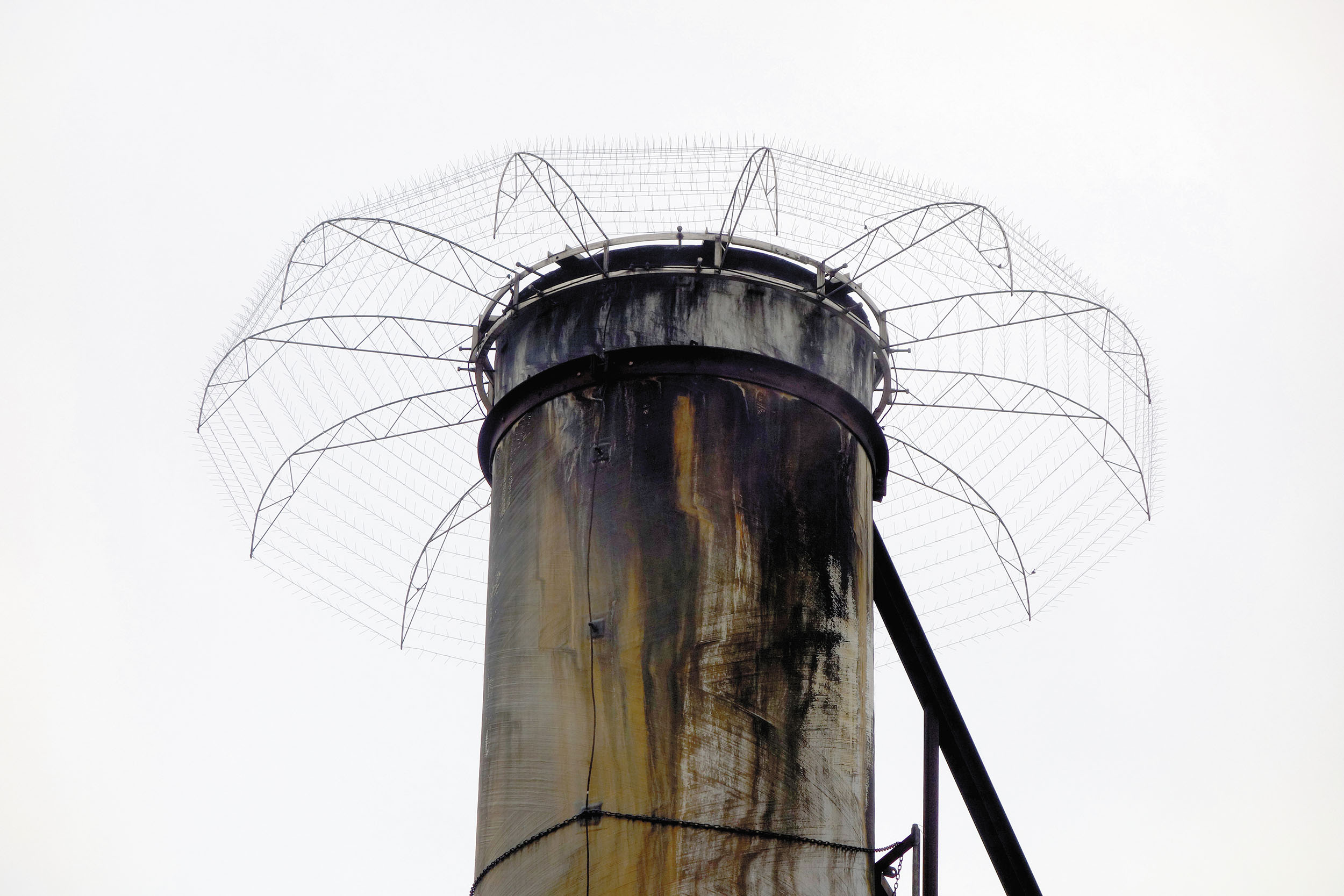
Close-up of a stack array. A tailored evaluation by qualified experts can safeguard critical infrastructure and personnel.
Lanzoni says, “A turnkey provider that consolidates all project phases under a single expert team ensures unified accountability, accelerates execution through streamlined coordination, improves system performance through integrated component design, and lowers overall costs by reducing errors, rework, and inefficiencies caused by misaligned vendor efforts.”
Considering the increasing risks posed by lightning-related events, pulp and paper mills cannot afford to rely on outdated or piecemeal lightning protection strategies. As operations become more complex and the consequences of downtime more severe, the need for a site-specific lightning protection strategy is imperative. Technological advancements now offer a range of solutions far beyond traditional methods—but selecting the right combination requires deep expertise and an understanding of each facility’s unique vulnerabilities.
For maximum safety, reliability, and operational continuity, mills are strongly encouraged to schedule a professional site assessment. This proactive step not only safeguards critical infrastructure and personnel, but also helps prevent costly disruptions and reinforces a facility’s long-term resilience against lightning-related threats.
Lightning Eliminators & Consultants, Inc. offers innovative lightning protection systems designed to safeguard operations, equipment, and people from lightning-related damage and service interruptions. Learn more at lightningprotection.com.