
September 28, 2026
A high degree of automation and production monitoring increases the efficiency of the complex and dynamic paper manufacturing process. Starting in the wet-end of paper production, continuous monitoring of the charge environment is critical for resource consumption and product quality.
For example, process chemicals—such as fixing agents, retention aids, flocculants, defoamers, and biocides—are added to the process to control and optimize its runnability and to improve the wastewater treatment, but these chemicals do not remain in the final product. Typical additives such as sizing agents, dry and wet strength agents, fillers and pigments, dye stuff, or optical brighteners should adhere to the fibers to remain in the end product and improve and optimize its properties. Especially when using different process chemicals and additives or when changing grades regularly, information on the zeta potential is essential for correct dosing.
The zeta potential value indicates the capacity of the fiber to react with the chemicals added. In the best case, all additives remain attached to the fibers; in the worst case, they are lost with the white water because they do not adhere to the fibers. Knowing the zeta potential is key to optimizing the dosage of additives. Traditionally, mills can use a laboratory measuring device (for instance, FPA Fiber Potential Analyzer, distributed by emtec Electronic) for zeta potential analysis.
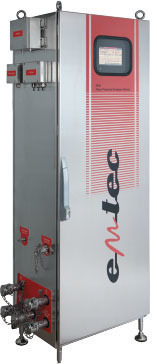
Fig. 1: emtec FPO Fiber Potential Analyzer Online.
As automation and digitalization play an increasingly important role in the paper industry, automatic online measurements that provide reliable and accurate real-time data on the process are becoming indispensable for meeting sustainability, environmental, and resource efficiency requirements. One such online measuring device for automatic zeta potential analysis is the emtec FPO Fiber Potential Analyzer Online (Fig. 1).
Once installed directly on the paper machine, it independently performs sampling, measurement, and cleaning, requires very little maintenance, and can take samples alternately from two connection points, e.g., before and after a dosing point. The FPO performs up to six measurements per hour and continuously transmits the measurement data zeta potential [mV], streaming potential [mV], conductivity [mS/cm], temperature [°C] and the pH value [pH] to the process control system or, optionally, to a secure data cloud for worldwide remote access.
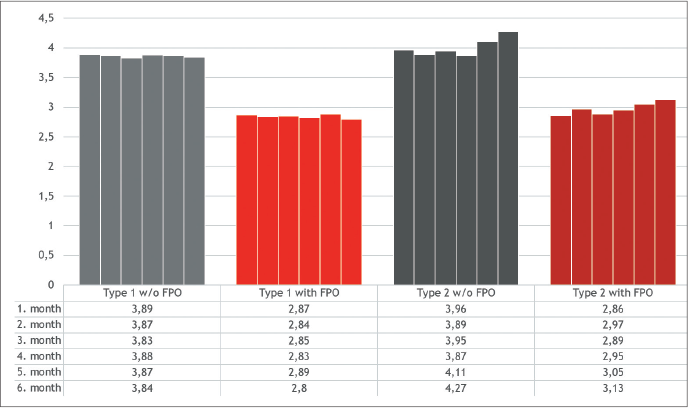
CASE STUDY A: OPTIMIZATION OF WET STRENGTH AGENT DOSING
The following case study at a tissue paper mill demonstrates the benefits and efficiency of using emtec FPO. The mill makes three end products: toilet paper, low-quality kitchen paper type 1), and high-quality kitchen paper (type 2) using a dual headbox for long and short fibers as well as recycled material. Regular production changes require adjustments to the pulp composition as well as to the type and quantity of chemicals used.
Due to staff shortages, continuous monitoring in the laboratory was not possible, which led to poor quality end products. In addition, issues with the runnability of the production process and wastewater treatment occurred due to overdosing.
To continuously monitor the zeta potential of both types of pulp, the mill decided to install the emtec FPO directly after its two mixing chests and before the dual headbox for six months. One mixing chest contains the suspension with short fibers and wet strength agent (WSA), and the second the pulp with long fibers and WSA.
Thanks to continuous online process monitoring using the emtec FPO, the mill was able to stabilize the runnability of the process under frequently changing production conditions, achieve the desired end-product qualities more quickly, improve wastewater treatment, and reduce WSA consumption by 25 percent (Fig. 2).
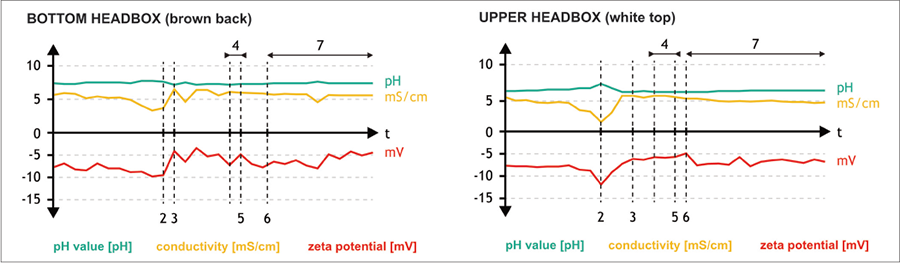
CASE STUDY B: FAST-TRACKED NEW PRODUCT
In this second case study, a new paper product was manufactured within five hours to the customer’s complete satisfaction when a paper mill switched its production to gypsum wallboard paper. This involves using a fourdrinier machine with a lower and upper headbox, which is normally used to produce liner and fluting paper for corrugated board.
Gypsum wallboard is made using a gypsum core and two different paper webs, which are responsible for strength and appearance. The front is made of two-material yellow board (cream face), consisting of a white top and brown back. Single-layer gray board (grayback) comprises the back of wallboards. In this case, the desired new product is a two-layer paper for the front of gypsum wallboards.
The advantages of process-integrated and automatic monitoring of the zeta potential, conductivity, and pH value in the wet-end area during the production conversion process prompted mill personnel to conduct a trial with the emtec FPO. The goal was to adapt the production process to the new product more quickly and easily.
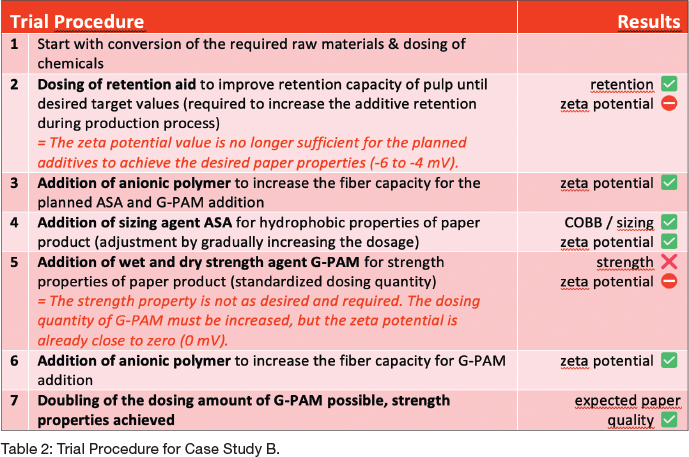
Crews installed the online device at the inlets of the lower and upper headboxes, and production ran during the trial with half-full reel drums. The specific aim of the trial was to find the right chemical dosing concept for the new kind of paper, whereby the pulp was to retain a larger amount of cationic charge carriers during retention.
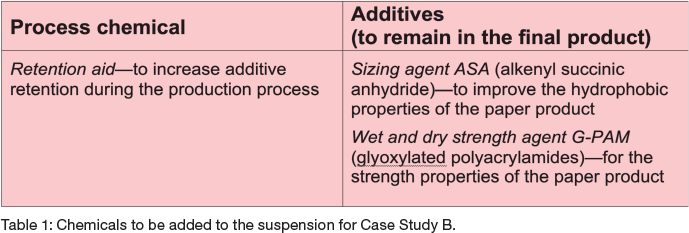
Table 1 lists the planned chemicals to be added to the suspension, plus their expected effects. Table 2 outlines the Trial Procedure.
With measurements from the emtec FPO, within five hours, technicians had created a chemical dosing concept for the new paper product that met all desired and required quality characteristics. In the end, the customer said, “Please don’t change a thing!”
ADVANTAGES OF FPO FOR EVERYONE
In addition to saving resources, time, and energy, FPO’s continuous and automated measurements also provide insights into past results. Real-time risk monitoring and immediate intervention in the process can reduce large fluctuations and stabilize the process. Automatic data transfer enables remote working. Since there is no longer any need for personal sampling at the paper machine, the workplace becomes safer and the process more efficient: working time is saved and all the necessary data is still available.
Chemical suppliers also reap advantages. Constant monitoring of the customer process is made possible by remote access to measurement data, but also by insights into historical measurement data on site, as automated measurements are continuously taken and stored. This facilitates quick and informed responses to customer complaints and simplifies troubleshooting.