
September 28, 2026
If you manage inventory in the competitive, capital-intensive paper and packaging industry, you’ve likely had moments when you wish you could see the future. With so many possible outcomes from every inventory decision, how can you know which is the best choice?
An academia/industry research partnership at the Massachusetts Institute of Technology (MIT) may have developed an answer. MIT’s Intelligent Logistics Systems Lab at its Center for Transportation & Logistics (CTL) and Mecalux have developed an artificial intelligence-based simulator capable of optimizing inventory distribution across different warehouses within the same logistics network.
The platform, called Genetic Evaluation & Simulation for Inventory Strategy (GENESIS), uses advanced machine learning models to analyze thousands of possible scenarios and determine the optimal stock level at each warehouse and when replenishment should occur. Powered by a genetic algorithm, the platform recommends optimal inventory levels and transportation strategies, enabling users to simulate multiple tactical scenarios and minimize costs, without incurring stockouts.
The AI-based simulator considers variables such as forecasted demand in each region, transportation costs, and the operational capacity of each warehouse to test various inventory replenishment policies without affecting real-world operations.
“The genetic algorithm enables multiple simulations to be run using different parameters until the most efficient logistics strategy is identified. Companies can compare scenarios and select the one that best fits their operations,” says Dr. Matthias Winkenbach, director of research at the MIT CTL and director of the Intelligent Logistics Systems Lab.
HOW IT WORKS
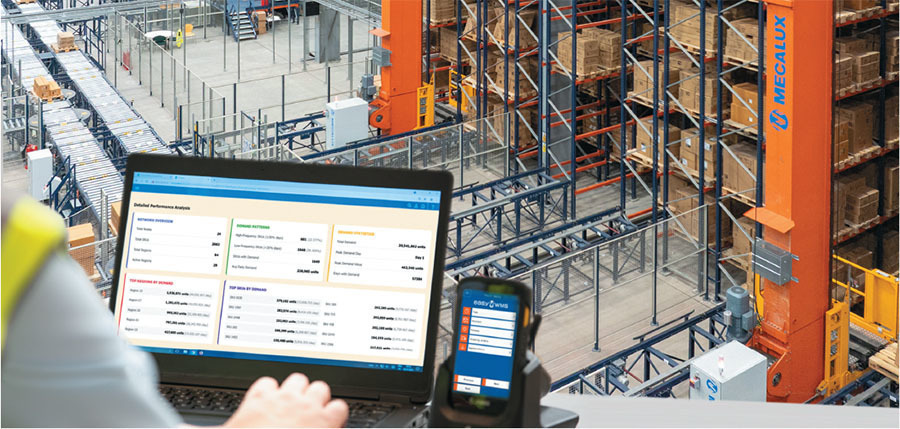
Once data and variables are entered into the system, GENESIS generates the optimal solution along with advanced statistical dashboards. Users can analyze indicators such as consumption patterns, regions with high demand variability, SKUs with a greater risk of stockouts, or warehouses experiencing supply issues.
One of the system’s key features is its ability to rebalance inventory across warehouses. Instead of automatically placing new orders with suppliers, the tool analyzes whether it is more efficient to transfer products from another facility within the network where excess inventory is available. In this way, companies can reduce costs and make better use of existing stock.
The system also recommends how to organize transportation. For example, it suggests whether shipments should be consolidated to optimize truckloads, or whether specific orders should be fulfilled from a particular location to reduce delivery times and costs.
“The real challenge wasn’t finding the right algorithm—it was making it fast enough to be practical,” explains Rodrigo Hermosilla, research engineer at the MIT Intelligent Logistics Systems Lab. “We developed GENESIS from the ground up to evaluate thousands of scenarios simultaneously rather than sequentially. What used to take days now takes minutes, which means companies can use it for real tactical planning, not just theoretical analysis.”
Unlike analytical solutions reserved for specialized users, GENESIS is designed for both technical teams and business decisionmakers. “The goal is to help companies minimize the total cost of their logistics network while ensuring the highest service level,” says Javier Carrillo, CEO of Mecalux.
UPCOMING AI APPLICATIONS
The AI-powered simulator is one of the first tangible results of the joint initiative between Mecalux and MIT CTL (see sidebar.) The collaboration is now entering a new phase focused on expanding the application of AI to other logistics processes, such as internal replenishment, digital twins in high-density automated storage systems, and slotting optimization.