
March 20, 2026
A comprehensive recycling concept for cellulose-based composite packaging and difficult types of wastepaper has long been overdue for the paper and packaging industry. Plants can now meet these challenges thanks to cavitation technology from Repulping Technology (RT).
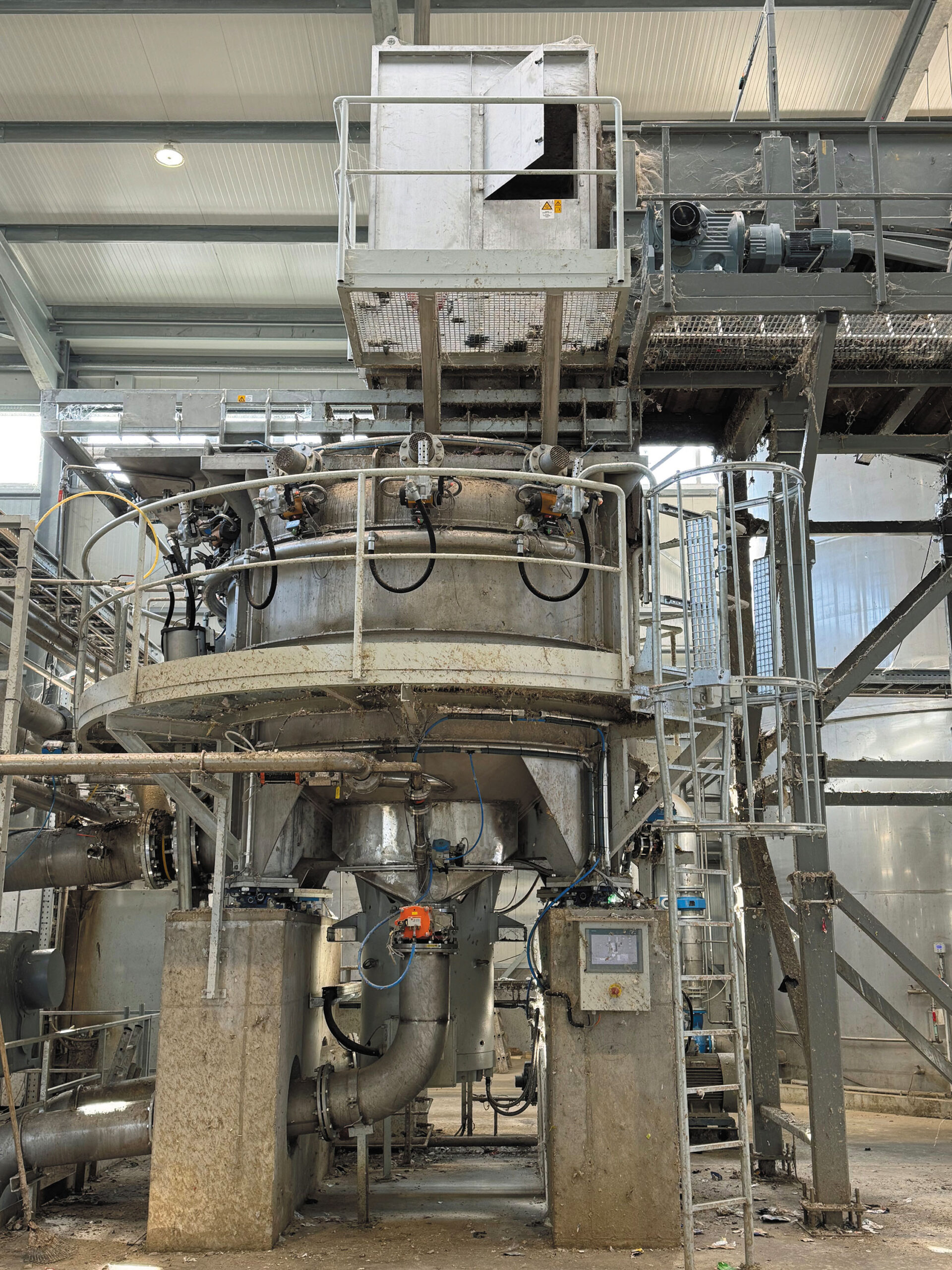
Fig. 1: The cavitation pulper.
The company’s innovative separation technology is the Cavitation Pulper (CP), winner of the Bavarian Environmental Award and the European Paper Recycling Award, among others. This technology (Fig. 1) separates cellulose fibers very efficiently and qualitatively, even from composite materials. The first plant using RT technology to process used recycling paper and composite packaging that is difficult to recycle has been operating successfully in Austria since 2024.
THE CAVITATION PULPER
Solutions on the market now for processing UBC (used beverage cartons) or papers from waste (paper and cardboards from lightweight food packaging) have been inadequate. Many valuable raw materials can only be poorly recycled with conventional technology (standard pulpers, pulping drums, etc.), or only recycled with very high energy consumption, especially cellulose-based composites and hard-to-recover grades. Challenging grades include:
Multi-material multilayer plastic packaging (“MMPP”):
- Composites and composite packaging (e.g. beverage carton packaging)
- Papers from waste (paper and cardboard from lightweight food packaging)
- Metallized packaging (e.g., aluminum-vaporized paper packaging)
Hard-to-recover grades (“h2r”):
- Coated paper and cardboard (e.g., paper cups and tableware)
- Kraft paper and cardboard (e.g., sack paper)
- Cores and core wrapping paper products
- Wet-strength papers (e.g., labels)
- Release liner/Siliconized papers
- Barrier papers, consisting of various barrier layers
With the cavitation process, facilities can recover almost the entire fiber content from these materials. Facilities can also use the technology to treat and clean plastics to improve their quality (for instance, removing stuck-on paper labels, cleaning foils, etc.)
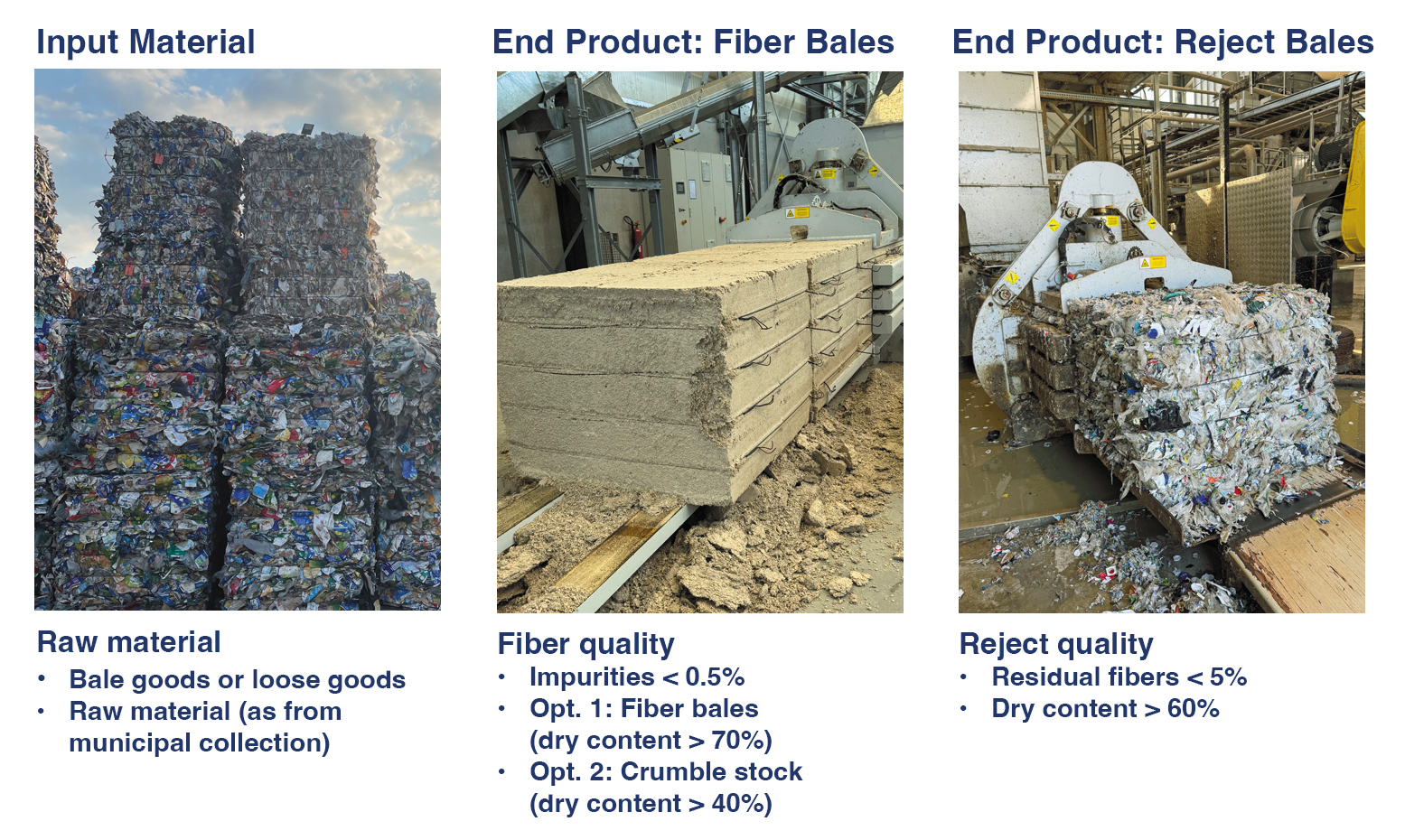
Fig. 2: (left)Input and semi-finished materials as separate output fractions—cellulose fibers and almost fiber-free plastic foils.
The CP is an innovative and patented system for the efficient separation of fibrous and composite materials (or non-fiber materials) using the purely physical principle of targeted cavitation to separate the molecular compounds in the raw material. The CP system consists of an airtight tank with an agitator (HC spiral rotor) driven by an energy-efficient direct drive, plus a vacuum pump. The cavitation effect is generated by the vacuum pump, which creates a vacuum inside the tank. In combination with rotor recirculation, the raw material is separated very efficiently.
The main advantages, as compared to conventional technology, are:
- Significantly lower specific energy consumption (up to 50 percent energy savings)
- No use of chemicals or hot water necessary
- Processing of MMPP and h2r raw materials
- Higher resource efficiency due to improved fiber yield
As a result, the use of cavitation technology allows the packaging industry, for example, to make greater use of composite materials that were previously inadequately recyclable (avoiding plastic waste and conserving resources). The system also shows a reduction in the formation of bacteria and yeasts in contaminated raw materials.
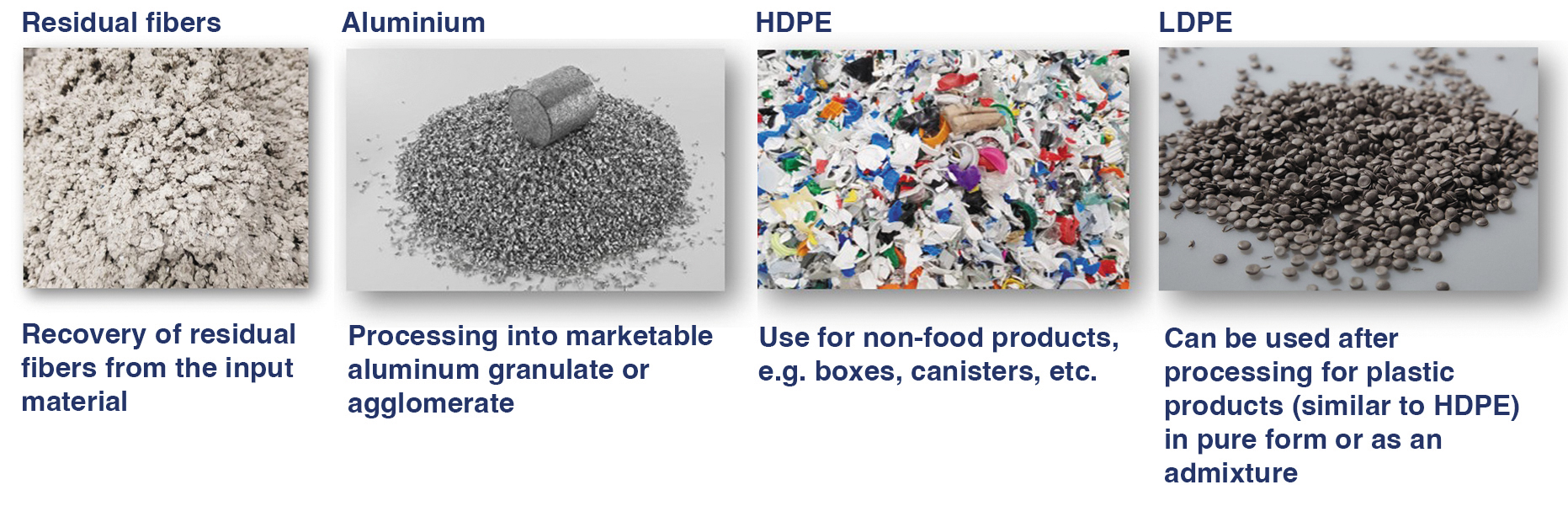
Figure 2 illustrates the processing of used beverage cartons (UBC). Photos were taken at a fiber processing plant using the CP.
To operate the recycling plant, the raw material is delivered in bales (optionally in bulk), de-wired, and fed into the cavitation pulper with added water. The cavitation process separates the raw material into a fiber and non-fiber fraction. The entire content is then fed into the downstream peripheral equipment.
- Fibers as a final product: After separation from the reject stream, the pulp enters further cleaning and dewatering stages. After final drying, the pulp is either produced as a fiber bale (Option 1) or, after initial dewatering, as crumbled stock or bulk material (Option 2).
- Reject as a final product: After the cavitation pulper, the reject fraction passes through various sorting and washing stages and is available either as compressed and wired bales or as loose bulk material. The reject quality meets the requirements for further material processing. RT can consider subsequent PolyAl processing when designing an overall plant concept.
COMPLETE POLYAL RECYCLING
IS POSSIBLE
The processing of MMPP materials (including UBC) produces reject quantities that currently are mainly sent for thermal recycling. This includes PolyAl (i.e., polymers and aluminum), which is the non-fiber fraction produced during separation. Repulping Technology and its partner company offer a highly efficient closed-loop solution for the complete recycling of composite materials. The rejects produced after the CP process are virtually fiber-free and are fed directly into the PolyAl recycling plant.
The process in detail is as follows:
- Step 1: Shredding and intermediate storage—to ensure a continuous process
- Step 2: Washing and separating—fibers, impurities, and aluminum are sorted out
- Step 3: Drying—via a centrifugal dryer
- Step 4: Sifting—separation of light and heavy plastic parts
- Step 5: Agglomeration and extrusion—production of end products
This means that a complete, closed-loop solution for composite and MMPP materials is now possible. Mills can achieve recycling rates of more than 90 percent with this technology.
PROJECT APPROACHES
Repulping Technology GmbH & Co. KG, Dresden, Germany, was established by Ulrich Neumüller to improve the resource efficiency of the recycling economy through innovative technologies. The company offers services supporting the entire implementation process, including:
- Preparation of a technical and commercial feasibility study (technical system concept with investment/operating costs and profitability analysis);
- Engineering phase: preparation of planning documents and final offer;
- Holistic realization partner for the construction of the recycling plant.
RT estimates total costs of approximately EUR15 million (about US$17.7 million) for an autonomous recycling plant (“greenfield”) with an annual capacity of around 40,000 tons of input material. The plant can then sell dried fiber bales at the best prices.
Alternatively, the plant can be located close to a fiber-receiving paper mill or integrated into mill operations (“brownfield”). This eliminates the need for costly pulp drying and thus minimizes energy and transport costs, to increase profitability. Revenue from the operation of such a recycling plant results from the additional payment of the dual systems (for example, German Fractions 512, which includes PET bottles; and 550, which includes other plastic bottles or cans) as well as from the sale of pulp to the paper industry.
Increasingly, the recovered composite materials (films) can also be sold at a profit or additionally processed by other systems (e.g., PolyAl processing) and used as a raw material for new plastic production (Fig. 3). This provides a complete, closed-loop solution.
This highly efficient overall solution from Repulping Technology and its partners is unique and enables end customers to meet the EU’s new PPWR quota compliance regulations (applicable as of January 1, 2026).
Due to the increasing requirements for the recycling of packaging and the associated recycling quotas like the PPWR legislation, high recycling capacities are increasingly necessary on the market. There are already bottlenecks in Germany, such as paper and cardboard from lightweight food packaging waste, that are putting disposal companies under increasing pressure.
Ulrich Neumüller is managing director and founder of Repulping Technology GmbH & Co. KG; Jakob Kratzer is product engineer; and Bounthanome Phommalad is business development manager. For further information, please contact: u.neumueller
@repulpingtechnology.com.
Fig. 3: (below)CP provides a holistic recycling solution for composite beverage cartons.