
March 23, 2026
In this article, Kari Tuominen, head of sales and technology for pulp and paper, Andritz, shares his insights into the decarbonization journey of the company’s Pulp & Paper Business Area. From pioneering fossil-free pulp mills to spearheading carbon capture pilots and bio-based innovations, Tuominen reflects on how Andritz is turning strategy into action.
‘WE’VE BEEN ON THIS ROAD…’
Decarbonization goes far beyond environmental responsibility. It’s about driving innovation, maintaining competitiveness, ensuring compliance, and building resilience in a rapidly evolving market landscape.
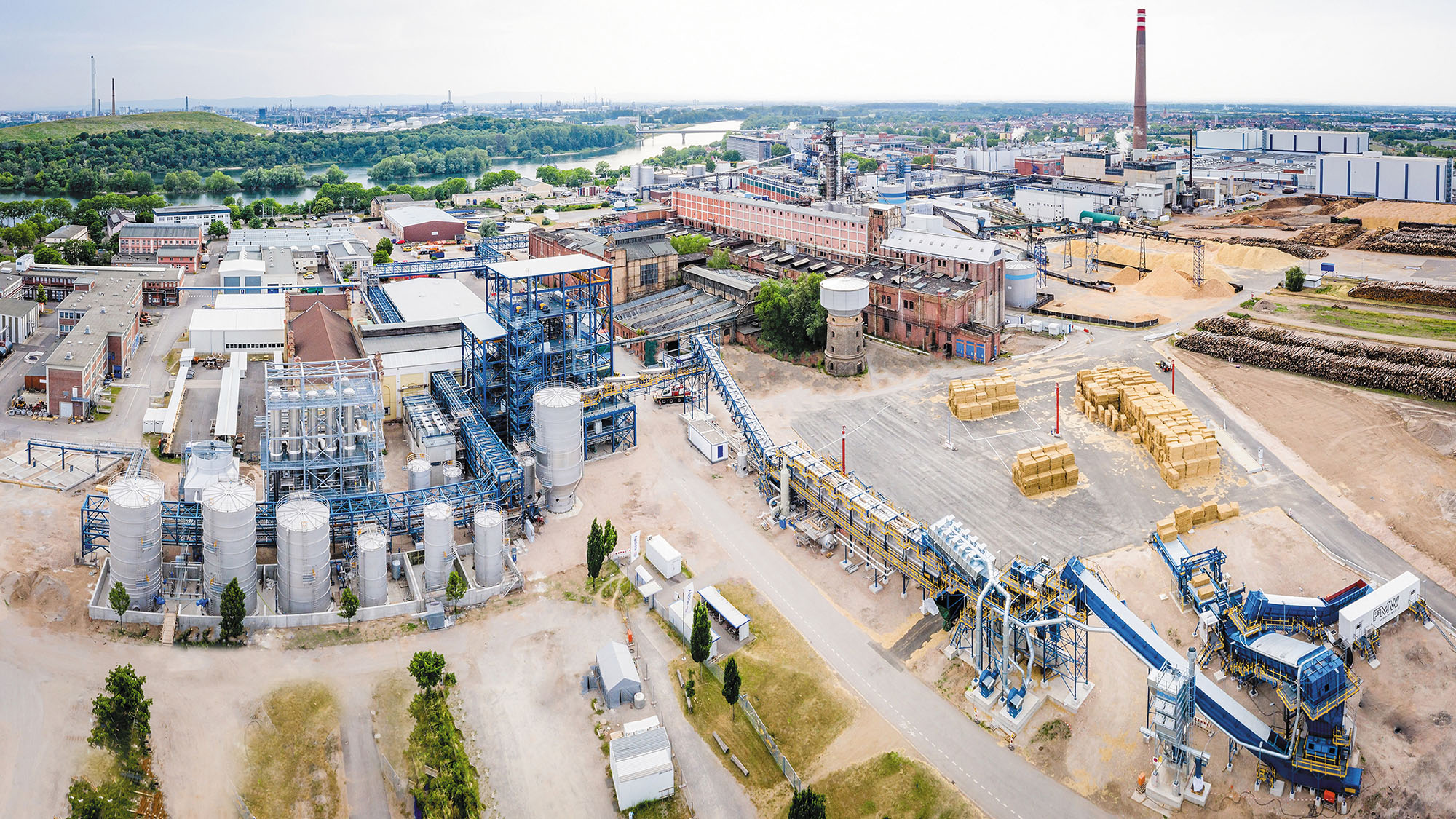
Andritz is a technology partner for Essity’s Mannheim, Germany tissue mill.
We’ve been on this road long before the word “decarbonization” was even widely used. At Andritz, decarbonization isn’t just a strategic priority—it’s a long-term transformation we’ve been steadily advancing for years.
Going low-carbon is also an industry-wide issue, and our strategy reflects that. We’ve built our approach on both reducing our own footprint and creating sustainable products that support our customers through their transitions.
We’ve been ahead of the curve from the very beginning, and I believe many exciting developments are still ahead of us. Since I joined Andritz 17 years ago to lead pulp mill technology development, I’ve witnessed—and been part of—some remarkable milestones. Each one has brought us closer to a more sustainable, innovative future:
- Making pulp mills fossil fuel free. We use bark gasification or biomass to power lime kilns, producing only biogenic CO2.
- Turning side streams into products. We’re reducing emissions and growing markets for products like lignin, biomethanol, and syngas. The production of our own sulphuric acid and sodium hydroxide adds to this list.
- Running carbon capture pilots. We’re collaborating with our clients at Metsä Group to test technologies at their Rauma mill in Finland.
- Using alternatives to wood. Such as our work with a customer based in Mannheim, Germany, where we’ve developed a process that turns straw into tissue, using less water and energy.
- Driving bio-based innovation. Including solutions such as carbon-negative Ekolusion insulation, the SteamX process for producing renewable black pellets, and technologies for fibre-to-fibre textile recycling.
Of course, being first out in front also means working hard to bring the market with us and shape the future of the industry. Customers are understandably cautious. With such high investment costs, it’s often difficult to find the one willing to be the first to adopt a brand-new technology.
The challenge is compounded by lagging or shifting standards—regulations are what truly drive market momentum. And with fossil-based products still cheaper, profitability remains a key concern.
Also, innovation doesn’t happen overnight. Getting it right is iterative, and it can take a decade or more to scale up. Fortunately, we have both the long-term tenacity and financial power to back our big ideas.
EMBRACING NEW TECHNOLOGIES AND ALLIANCES
One of our big targets is to find new ways to increase the value of wood—and that in itself is a decarbonization action. We’ve already reached out to 70+ companies in the Business Finland-funded BioCircleToZero program (see sidebar) to look at working together on developing new products and processes to double the value from wood without harvesting more trees. Our customers are highly interested in our plans.
We’ll also expand on the progress we’ve already made and explore other avenues. Possibilities include the potential to combine carbon capture from pulp mills with green hydrogen to create renewable methanol.
This isn’t just strategy on paper. Through persistence and innovation, we’re already turning decarbonisation into reality. Our customers see us as a reliable partner with the knowledge and clout to deliver. We should be proud of that—and excited for what’s ahead.
What is BioCircleToZero?
Finnish forests (and forests around the world) are a valuable but limited resource, and protecting their biodiversity is essential. Today, 40-50 percent of the biomass entering pulp mills is burned for energy, sent to landfills, or released into nature—an untapped opportunity for producing e-fuels, textiles, and bio-based chemicals and fuels.
The BioCircleToZero program’s mission is to double the value from wood without harvesting more trees. This Andritz-led R&D program will build an ecosystem around biorefineries to leverage the currently wasted potential of underused streams. This ecosystem will enhance the use of these materials, and renewable electricity, to create new value-added products and services while sharing resources and services needed for research, development, and innovation.
Funded through the Business Finland challenge competition for leading companies, BioCircleToZero was selected for the Veturi ecosystem program by Business Finland in 2025. The program is open for collaborators, partners, and brilliant minds to help develop it, and we invite everyone to actively participate in this shared journey to double the value of forest products. Additionally, companies and partners joining the program’s ecosystem can receive a total of EUR20 million (more than US$23 million) in funding from Business Finland.
The program will run from 2025 to 2030, driving innovation and growth in the forest industry. Learn more at andritz.com.